The seven pillars of industry
A deep dive into the often hidden capabilities of the Don Valley Corridor, and the frontier firms investing in people, process and productivity.
Chapter 1, pp10-34
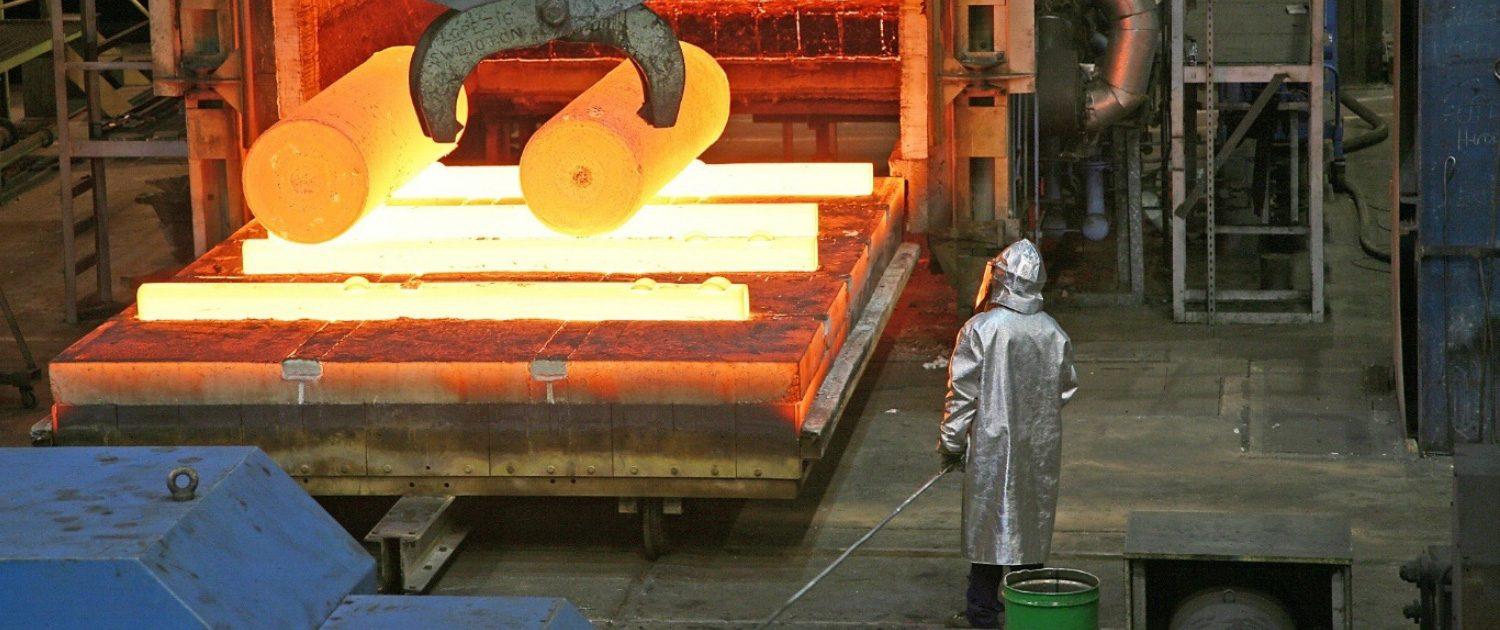
The Don Valley Corridor today is home to a cluster of engineering companies whose mastery of world-class forging, casting, forming and machining technologies makes South Yorkshire critical to global aerospace, space, security, defence and energy markets.
Pillar 1 / p12
Advanced alloys and metals
The science and manufacture of innovative alloys are a core Sheffield capability, with roots stretching back beyond Bessemer’s revolution in steelmaking of the 1850s. Here we highlight two companies that are investing heavily in people and technology, playing to the enduring strengths of the city region.p12
Special Melted Products
The first is Special Melted Products (SMP) in which Taiwanese corporation, Walsin Lihwa, has invested £142m to acquire control. With a revenue of £4.3 billion, Walsin’s investment in SMP is part of a rapid series of acquisitions enabling it to become a vertically integrated global player in the stainless steel and nickel superalloy markets.p12
Prior to the investment, SMP’s expertise had already positioned Sheffield as a global centre of excellence for nickel-based superalloys - high integrity materials that comprise around 50% of every civil and military jet engine by material value. SMP’s customers span aerospace, civil nuclear and energy.p12
Moreover, the company’s facilities include some of the Europe’s most advanced vacuum induction melting and forging capabilities. With three closely clustered sites along the Don Valley Corridor it is a one-stop-shop for multiple melted alloys and components. As a result, the combined Walsin-backed cluster in South Yorkshire is now one of the most advanced materials hubs for aerospace, defence and nuclear energy in the world.p12
Marcegaglia Sheffield
The second company is Marcegaglia Sheffield - the Italian corporation’s Sheffield acquisition has deep roots going back to Harry Brearley’s discovery of stainless steel of the 1920s.p12
Today its Italian parent is a global manufacturing powerhouse with revenues of approximately €9.6 billion. The company is investing £50 million in a significant electric arc furnace upgrade which will make Sheffield home to one of Europe’s most modern stainless steel melt shops, increasing capacity by 60% and positioning the Don Valley Corridor as a critical node in European supply chains for automotive, construction, energy and specialist industrial markets.p12
Marcegaglia, which is a pioneer green steel producer, is now helping develop E. ON’s district heat network in Sheffield’s Lower Don Valley, utilising waste heat as a by-product of the stainless steel melting process. This will play a crucial role in enhancing the resilience of the Lower Don Valley’s energy infrastructure, while contributing to Sheffield City Council’s decarbonisation goals. It is a powerful example of industrial symbiosis - the steel plant’s heat becoming a community energy asset.p12
Sheffield needs to drive its industrial growth faster by seizing on the amazing global manufacturing platform we already have today. A platform that can open doors to huge inward investments, generate high value-added skills and deliver inclusive wealth that everyone can share in.
Pillar 2 / pp13-14
Forging and casting
Aerospace and defence accounts for 51.6% of all titanium consumed globally, and the reasons are clear: the Airbus A350 and Boeing 787 families incorporate circa 20 metric tonnes of titanium per plane. Multi-year production schedules anchor predictable demand.p13
Given the global order backlog of over 17,000 commercial aircraft - more than a decade of production at current rates - demand for titanium in airframes, landing gear and engine systems is a huge opportunity for the Don Valley Corridor companies.p13
Rolls-Royce’s Advanced Blade Casting Facility (ABCF) at the Rotherham end of the Don Valley Corridor, is the result of a £110 million investment resulting from the success of its R&D partnership with the AMRC. It is now one of the most technologically sophisticated casting plants in the world.p13
The facility employs more than 300 people and casts, machines, and inspects intermediate and high-pressure turbine blades for the Trent XWB-84, powering the Airbus A350 and the Trent 1000XE, powering the Boeing 787.p13
Output to double by 2030
In March 2026, Rolls-Royce announced another major investment in the Rotherham facility, following a £2 million grant from the South Yorkshire Mayoral Combined Authority (SYMCA). The firm’s £19.3m spend should enable the facility to double its output to 210,000 blades per annum by 2030 in anticipation of the rise in global demand.p13
Our incredible team are making components every day that push the boundaries of science. This is a vote of confidence in them and in the capability of the wider region to stay at the forefront of advanced manufacturing. We look forward to future collaborations that will help keep these valuable skills in the community.
From closure threat to secure £18 million investment
A brilliant example of the clustering effect in the Don Valley is the presence of Castings Technology, a Management Buy Out (MBO) from the University of Sheffield. The Castings Technology team and its kit were the brainchild of AMRC founder Keith Ridgway. Built with the support of £15m of funding from the Aerospace Technology Institute (ATI). Two forces that will feature frequently in the pages of this report.p14
Shortly after Ridgway left the AMRC in 2019, the University decided to close Castings Technology with the loss of 70 highly skilled staff. The intervention of veteran Labour MPs averted this outcome, leading to an MBO.p14
Today, CEO Richard Cook and Chair Kevin Parkin, have created a world-beating titanium castings enterprise that last year secured £18m of private capital finance from the City to move to a 195,000 sq ft production facility in Sheffield.p14
Since the threat of closure, the business had grown from 65 employees in 2024 to 103 by end of 2025. With demand from the global aerospace industry a further 20 hires are planned, taking the workforce to 123 by the end of 2026. Its specialisms span titanium casting and super duplex steels for critical, high-duty aerospace applications.p14
Pillar 3 / pp15-16
Precision machining
As the previous section revealed, Rolls-Royce is often found to be the anchor at the end of a complex supply chain providing Boeing and Airbus with the engines that power more than 35 types of commercial aircraft and with more than 13,000 engines in service around the world. The precision engineering talents found along the Don Valley Corridor are critical links in that supply chain.p15
Here we look at two precision machining firms whose stories illustrate the commitment of Rolls-Royce, both to enduring partnerships and to engaging with disruptive start-ups and spinouts. The first is:p15
CW Fletcher’s “Sterling Works” in Rotherham, has one of the longest-standing relationships with Rolls-Royce, dating back to the Second World War, when its skilled workers manufactured the Merlin engine for the Spitfire and Lancaster aircraft. Four decades later the company delivered the first components for the Trent and V2500 engines and has been a continuous Trent family supplier since then. In 2019 it secured a £160m contract to supply Rolls-Royce with precision engineered parts over the next decade.p15
The company is now embarking on a continuous digitalisation journey, initially with the support of a Knowledge Transfer Partner (KTP), Rufino Bolado-Gomez from the University of Sheffield AMRC. A computational neuroscientist, Rufino rapidly became key to the business bringing new ideas and processes on board. This is a small but telling example of how KTPs can help provide the people to “diffuse” innovation and technology across a growing industrial cluster.p15
Clocking in at AML Sheffield
From the moment the AMRC took flight with Boeing in 2001 its two founders, Adrian Allen and Keith Ridgway knew they would need to create an early spinout if they were to keep pace with the precision engineering needs of its global aerospace and energy manufacturing partners. They were that good. And confident.p16
The choice of Gareth Morgan to lead was obvious. As early as 2002, the founders had earmarked the lacrosse-playing Morgan as a natural successor. They had sent him to Canada in 2005 to sit at the feet of machining chatter guru, Professor Yusuf Altintas. He returned with no rivals.p16
More California than Catcliffe
What began in 2008 as a two-man band in a shed (more California than Catcliffe) has grown to a talented team of more than a hundred machining engineers operating within earshot of the AMRC. Using advanced 5-axis CNC machining, turning and milling, AML today produces seriously complex components - discs shafts and aerofoil, parts - for global clients, including Rolls-Royce, Siemens and G.E.. It doesn’t come more demanding.p16
In recognition of its manufacturing excellence AML won the King’s Award for Enterprise Innovation last year. It has also attracted substantial investment from the new owners of SMP, Walsin Lihwa, enabling a major uplift in growth and capacity. As Gareth told The Manufacturer following the award: “The customer was exploring multiple manufacturing innovations, from novel design elements to new materials and technologies to achieve the improvements in performance, weight and emissions levels being demanded by aircraft manufacturers.p16
AML has also won further recognition from Siemens Energy in recent months, winning a Collaboration Award against fierce multinational Tier 1 competition in 2025 to supply a large portion of the discs, shafts and blades for their aeroderivative gas turbines, which is a rapidly growing market for green energy and data centre grid support across the globe.p16
The confidence to rise to the challenge
“This combination of high demand and challenging technical requirements from an existing customer presented a fantastic opportunity to develop a new aerofoil manufacturing process that met the stringent demands of the next generation of business aircraft engines. It took us into the relatively unknown territory of automation and robotics, but our long-term relationship with the AMRC gave us the confidence to rise to the challenge.”p16
The shot clock drives results
Gareth also noted the importance of good parents: “As the first spin-out from the AMRC it was inevitable that innovation would be woven throughout our DNA. As a member of the founding AMRC team - and being a passionate lacrosse player at the time - I quickly came to understand the power of the “shot clock” in creating a results driven culture where every team member has a crucial role to play in putting the ball in the net.p16
Pillar 4 / pp17-22
Materials - Composites and additive manufacturing
Perhaps the most striking image of South Yorkshire’s competency in composites was the sight of a McLaren Senna performing doughnuts on the factory floor some days before the Royal opening of its £50m Composites Research Centre by the Duke and Duchess of Cambridge in 2019.p17
Unlike West Yorkshire, with its deep skills in wool and textiles, its southern neighbour’s reputation is held aloft by steel and alloys. That began to change, however, with the partnership between the AMRC and Boeing. There was an industry wide aircraft lightweighting drive. This meant not just more titanium parts in its aircraft, which played to the region’s forging, casting and machining strengths, but also lighter aerostructures using composites. Could Keith Ridgway and his AMRC team weave their magic on composite structures, his Boeing partners asked?p17
The power of the Boeing partnership
What happened next is an example of why close personal links between industry and its R&D partners are key to radical innovation and the growth of high-performing clusters. In this case Boeing seconded several senior figures from its in-house composite team to be embedded in the AMRC. This enabled the rapid transfer of Boeing’s competencies in composites, to the AMRC in the Don Valley Corridor.p17
The AMRC’s composite R&D work began in earnest in 2006 and was housed in a warehouse on an industrial estate in a small village between Rotherham and Sheffield. A decade later, with substantial support from the Aerospace Technology Institute (ATI), a 3D weaving machine, braiding rig, jacquard and a tailored fibre placement machine were acquired for cutting-edge research into automated production, composite machining, advanced curing, novel material processes and dry fibre technologies.p17
McLaren’s investment a little over a decade later was a massive signal that the Don Valley Corridor was now home to a truly world class capability in the manufacture of composite structures. This is proof of how the ATI’s consistent approach to aerospace funding and its close partnership with the AMRC and its co-founding partner, Boeing, has helped form the kernel of a resilient advanced manufacturing innovation cluster.p17
From an industry where narrow-body production rates must jump from 30 shipsets a month to 100, traditional manual layup is a bottleneck we can no longer afford. COMPASS bridges this gap by combining the AMRC’s expertise in composites and digital manufacturing. By proving these high-rate methods at technology readiness level (TRL) six, we are ensuring the next generation of aircraft isn’t just designed in the UK but manufactured here.
More recently, these composite skills were the centrepiece of another ATI funded project (£35 million), backed by additional funds from SYMCA and Sheffield City Council (£14 million). The COMPASS Project (Composites at Speed and Scale) now has a home, the kit inside, and a specialist industry partner, Loop Technologies, who have established a footprint on the Advanced Manufacturing Park.p18
Sixfold increase in composite aerospace market
The ATI reports that composites now account for more than 50% of the weight of the Airbus A350 and Boeing 787, compared with just 6% on the Boeing 747, and project that the global aerospace market for composites will grow from $16bn in 2022 to $34bn by 2032. The ATI also suggests that the UK could grow its market share sixfold by 2050, with a total addressable market of more than £65bn to 2050 if it can secure work on future ultra-efficient aircraft platforms.p18
The next generation of Airbus and Boeing single-aisle aircraft is expected to use even more composite material, including carbon-composite wings, making production rate and cost the central challenge. The Sheffield region’s opportunity is no longer just to invent better composites, but to crack how they are produced at speed and scale for the next generation of commercial aircraft. This is why the COMPASS programme is so important.p18
The broader message is that composites are becoming one of the Sheffield region’s most scalable opportunities. Boeing’s current composite programme in Sheffield is explicitly tied to future aircraft demand and high-rate manufacture, while McLaren’s presence shows that the same regional capabilities can be commercialised beyond aerospace. Furthermore, future aircraft are likely to use both more titanium and more composites: titanium where heat, strength and durability are critical, and composites where lightweight structures deliver fuel and emissions savings.p18
Retaining and expanding R&D gains in the region
The challenge for South Yorkshire’s economic growth policy makers is how to ensure that the knowledge gained in projects such as these lead to new industrial facilities located in the region, either as inward investors or new manufacturing businesses.p18
As the Centre for Cities has reported, much if not most of the R&D carried out by the AMRC benefits regions other than South Yorkshire. Scotland and Northern Ireland are currently the most likely beneficiaries if the Compass needle points in the right direction.p18
The AMP’s role as a place of innovation and high-skilled activity means that some of the direct economic benefits of the AMP, such as new machining techniques, are realised in other parts of the country where low-cost manufacturing takes place.
Additive manufacturing: Powdering the future
Deep within Sheffield's advanced manufacturing cluster, a quieter revolution is taking shape. Alongside the forges and foundries, a new generation of additive manufacturing companies is emerging - many with roots in one of the world's most influential metal AM research centres.p19
The Future Manufacturing Hub
The two complementary pillars which uphold AM research are both at the University of Sheffield. The first pillar is Professor Ian Todd's EPSRC-funded MAPP programme and £10 million Future Manufacturing Hub, which has attracted over £20 million in combined public, industry and university investment to develop powder-based manufacturing processes that are lower in energy, cost and waste than conventional routes. Partners include GKN Aerospace, Johnson Matthey and Airbus, with Sheffield leading participation in two £33 million AM programmes aimed at revolutionising how flight-ready components are designed and produced.p19
Henry Royce Institute
The second pillar is the Henry Royce Institute - the UK’s national institute for advanced materials research and innovation. Royce at Sheffield leads on metals processing innovation specifically designed to bridge the gap between small-scale laboratory research and industrial-scale manufacturing, with unique industrial-grade machines capable of delivering research across TRL 1-6.p19
At its heart are: the Royce Translational Centre (RTC), where research meets industrial application, and the newly built Royce Discovery Centre on the University’s city centre campus, where the next generation of materials scientists will train using the very latest technologies in 3D additive manufacturing, digital manufacturing and nano characterisation.p19
Sitting at the intersection of both pillars is Professor Martin Jackson - Professor of Advanced Metals Processing at Sheffield and the Henry Royce Institute’s Research Area Lead for Advanced Metals Processing. Jackson’s career trajectory tells its own story about the depth of Sheffield’s materials science ecosystem. A Sheffield graduate who worked for Rolls-Royce before a PhD at Imperial College London, he won the IOM3 Titanium Prize in 2003, was awarded a Royal Academy of Engineering/ EPSRC Fellowship in 2005, and returned to Sheffield in 2008 to develop what has become a globally recognised programme in processing of titanium and light alloys.pp19-20
Sheffield is an important national hub for advanced manufacturing, building on its historic importance in steelmaking. The Royce will capitalise on the local industry infrastructure and expertise to provide a world-leading centre for advanced metals manufacturing for the next few decades.
FAST forward to sintering
Jackson’s signature contribution is FAST-forge - Field Assisted Sintering Technology combined with precision forging - a process that tackles one of advanced manufacturing’s most persistent economic problems: the prohibitive cost of titanium. Jackson’s central ambition has been to provide a step change in the economics of titanium-based alloys through the development of non-melt consolidation routes, turning surplus AM powders and titanium swarf into high-integrity near-net-shape components.p20
In June 2025, his group published results on Titanium-S23, a novel β-rich titanium alloy with exceptional tensile toughness produced entirely from recycled Ti-6Al-4V and Ti-5553 powders using FAST - demonstrating that sustainable alloy design and world-class performance are not in tension but can be achieved simultaneously.p20
The commercial and strategic implications are significant. Titanium is essential to aerospace, defence, medical implants and energy - but its cost has historically constrained adoption. A process that dramatically reduces that cost while recycling waste powder into flight-grade components is not an academic curiosity. It is a manufacturing breakthrough with direct application to many sectors.p20
From the big players to spin-outs and smart supply chains
What makes Todd's ecosystem distinctive is not just the research - it is what the research produces. Entrepreneurial PhD students are spinning out companies at an accelerating rate, supported by the University's Commercialisation framework and a network of private sector mentors. The results are compelling:p20
Instruct3D
Led by Henry Saunders, combines physics-based simulation with real-time sensor data to optimise print speeds, manage powder, predict defects and certify parts - effectively making metal AM more reliable and improving commercial viability at scale. The company is in discussions with major market players and is directly supported by DECSAM, a £38 million Airbus-led UK programme the University joined in 2025. For South Yorkshire, Instruct3D represents something strategically significant: an extension of the region’s role from metals processing and printing into the higher-value digital infrastructure that next-generation AM supply chains will increasingly depend on.p20
Wayland Additive
Closely connected to Todd’s ecosystem, is taking a different route to the same destination. Its NeuBeam® electron beam technology - born from precision engineering research at Reliance Precision near Huddersfield - overcomes fundamental limitations of laser-based AM, offering greater flexibility for the most demanding industrial applications. Having raised £4.2 million in early 2024, Wayland has already sold machines into aerospace, mining, medical, motorsport and defence markets across America and Europe.p20
Others have been drawn to invest in the Sheffield AM cluster to access its materials innovation culture:p21
Rivelin Robotics
Arrived in Sheffield in 2020, drawn by the density of the cluster. Its founder Robert Bush spent two years commuting in a campervan before relocating both himself and the business permanently - a testament to the pull of the ecosystem.p21
Rivelin’s focus is post-processing: the unglamorous but commercially critical challenge of automating the support removal and finishing stages that still make metal AM slow, hazardous and expensive. Its NetShape robotic system, developed as lead partner in Innovate UK’s CAMPFIRE Project - alongside others like GKN Aerospace, Siemens Energy and Saint-Gobain - cut processing time by 28% per part in trials.p21
But Rivelin’s ambition extends beyond speed. Its digital thread capability - the unbroken data chain that follows a part from concept to delivery - is what enables AM to be used in safety-critical applications. As Bush puts it: “You cannot deploy additive manufacturing as a production technology in aerospace or medical without that traceability. We are enabling certification - so that you can use it in a turbine blade or a hip implant.” He also adds, “Rivelin is much more than metal AM, as we are already moving into casting, forging, and MRO.” (Maintenance, Repair and Overhaul).p21
Fyous
A radically disruptive start-up perfecting what it calls PolyMorphic Manufacturing - a system using tens of thousands of digitally controlled pins to create reconfigurable moulds in minutes, positioning itself as a challenger to both traditional injection moulding and 3D printing.p21
Founded in 2020 by Joshua Shires and Thomas Bloomfield the company is based in Heeley, Sheffield, and backed by £3.3m in total funding. It also, has angel investment and backing from Scott Crump, inventor of Fused Deposition Modelling and former chairman of NASDAQ-listed Stratasys.p21
Fyous has a waitlist of manufacturers in the footwear and dental sectors and is building its first polymorphic moulding machine in partnership with Peacocks Medical Group, the UK’s largest independent orthotics company. The dental pivot looks strategically shrewd - a sector more receptive to innovation and one that could open the door to further applications at scale.p21
Acantecs
Acantecs sits at the deeper end of the materials science spectrum. Founded in 2022 by John Schofield - whose career spans three decades in superalloys, casting, forging, steelmaking, master melting and complex component manufacture - he has turned his focus to hot isostatic pressing, specifically PM-HIP, for the most demanding alloy systems in aerospace and energy.p21
Collaborative research sits at the heart of the company’s model, working with academic institutions and commercial partners to de-risk early-stage development, prove materials viability and translate findings into high-integrity components fit for demanding service environments.p21
Forg3D
Founded by Richard Mincher, it relocated to the Advanced Manufacturing Park from Scotland in 2024, is developing wire arc additive manufacturing for the in-situ repair of tungsten components inside fusion reactors.p21
Global fusion brings regional benefits
As the report highlights later, when looking at clean energy there is a strong connection between the additive materials’ story and the quest for fusion energy. Of the four companies selected for the UKAEA’s prestigious Fusion Futures programme - developing components for the power stations of the future - three are Sheffield-based: Acantecs, AML and Forg3D. This is not a coincidence; it is cluster logic at work.p22
UKAEA are developing the science and technology behind the realisation of fusion energy through their STEP program (Spherical Tokamak for Energy Production) to design and build the world’s first prototype commercial fusion energy power plant. To support this, they have established a first-of-a-kind £20 million test bed at the Advanced Manufacturing Park so that they can work closely with leading manufacturing expertise on the testing and developing of components for commercial fusion machines. There are over 26 regional project partners involved, addressing areas like materials, qualification, manufacturing and welding.p22
Additive and fusion
These engineering and manufacturing companies show how Sheffield is expanding its materials and science heritage into a platform for the industries of the next half-century. Specialist knowledge is being generated, technology spun out, commercialised and drawn back into the cluster in a self-reinforcing cycle.p22
Acantecs is proud to have participated in the UK Fusion Futures programme. By giving us the opportunity to develop novel canister manufacturing techniques alongside our established PM HIP technology and processes, we have opened a new pathway for near-net shape product production. This advancement not only supports the evolving needs of future fusion technologies but also highlights the power of collaborative innovation.
Pillar 5 / pp23-27
AI and the digital imperative
There is a brutal arithmetic at work in manufacturing right now. Were UK manufacturers to close the gap with global technology leaders by increasing the uptake of AI and robotics, Make UK estimates it could add around £150 billion to UK GDP by 2035 - a 5% increase in the size of the economy.p23
These productivity gains are not theoretical. They are being recorded on factory floors today, just not in the numbers needed to unlock that game-changing economy-wide productivity boost and not enough in South Yorkshire. UK productivity since the 2008 financial crash has slowed from an annual average of 1.9% between 1993 and 2008 to just 0.4% between 2008 and 2023. This is the scale of the challenge.p23
In the vanguard or among the vanquished
The question for Sheffield and South Yorkshire is not whether AI will transform manufacturing. It will. The question is whether the region’s manufacturers and its AI and digital companies will be among those unlocking the benefits of that transformation - or standing on the sidelines watching it happen elsewhere.p23
Our research suggests the answer is: both. Sheffield has genuine world-class R&D strengths in AI and digital manufacturing. It also has a productivity gap in its SME base that is wide, well-documented and closing too slowly. Understanding both - clearly and without spin - is what allows investors and policymakers to see where the real opportunity lies, and how the blockers can be removed or overcome..p23
In short, the region needs to achieve two critical goals:
To diffuse AI, automation, robotics and the full suite of digitalisation technologies across the region’s industrial base from frontier firms to the long-tail of underperformers.p23
To accelerate the spin-out, start-up rate of AI and robotics firms emerging from the city’s two universities. Today, Sheffield’s sister city Pittsburgh is a global leader in robotics with at least one unicorn, Gecko Robotics, in this field. Sheffield needs to follow its lead.p23
Factory 2050: local or national asset?
The AMRC’s Factory 2050 is one of two premier league, robotics and automation research facilities in the UK. The other is MTC, a fellow member of the High Value Manufacturing Catapult.p23
Its standout project was to create an automated production system for BAE Systems’ F-35 Samlesbury facility in Lancashire that accurately machines holes in composite aircraft components using multiple robots to automatically handle composite parts and then countersink high-tolerance pre-drilled fastener holes.p23
Factory 2050 also developed a smart ‘cobotics’ workstation for BAE Systems’ factory of the future - fitted with a range of digital technologies including operator recognition and a sensor-enabled cobot arm. The workstation was piloted at BAE’s Warton site in Lancashire to work safely alongside manufacturers building cutting-edge combat aircraft.p23
Perhaps the most salient observation about these projects - and others more recently with Rolls-Royce SMR - is that the economic and commercial benefits did not land in Sheffield or South Yorkshire but in Lancashire and Derby. Indeed, the success with BAE Systems resulted in the AMRC being funded to establish a £20 million R&D facility near Preston, on the Samlesbury Aerospace Enterprise Zone alongside BAE.p24
On the development of Factory 2050’s smart workstation there might also be an argument that technologies originated by clever researchers at the AMRC, could be developed into spin-outs for Sheffield and the Don Valley Corridor.p24
Right out of spin-outs
Here the comparison between Factory 2050 and other robotics/automation centres around the world is instructive. Fraunhofer IPA, based in Stuttgart, clearly surpasses Factory 2050 in scale and breadth in AI-robotics with 50 years of institutional experience. DLR Robotics and Mechatronics Centre - is arguably the world’s leading institution for fundamental aerospace robotics research. In the Fraunhofer case, an average of two spinouts a year are created from its R&D. If the AMRC’s Factory 2050 were to have matched that number it would now have over 20 AI-robotic and digital start-up companies under its wing. Instead, it has none. What is needed to change this?p24
Perhaps the American experience provides an answer? Take the ARM Institute (Advanced Robotics for Manufacturing), based in Pittsburgh, Sheffield’s sister city. It has close parallels with the mandate of the AMRC, but it also has important differences in governance that deserve closer scrutiny. Structured as a public-private partnership, ARM gives real power to the private sector in governance. By contrast the AMRC is university owned and controlled, hence a much less industrially-focused model.p24
Industry led advanced manufacturing R&D institutions
In the case of ARM, Brett B Lambert, its Chairman, is Managing Director of the Densmore Group a leading defence and security company. He had been appointed by President Obama as the deputy assistant secretary of Defense for Manufacturing and Industrial Base Policy. He reported to the President on all matters relating to the defence industrial base. A man, in other words, with huge domain experience in the field of defence, surrounded by other figures from industry, academia and government. Very much industry led.p24
The HVM Catapult network, by contrast, sees four of its six CEOs reporting to University Presidents and Vice Chancellors, often with little or no relevant domain experience. For instance, this role was filled by a Professor whose expertise was natural disasters and landslides. The Midlands based MTC, the only newly created HVM Catapult, puts the private sector in senior leadership roles. As does the North East based CPI, which also has a facility in Scotland.p25
The Electroimpact connection
When we do see industry taking a starring role, as America’s Electroimpact has done with the AMRC both in Wales and in Sheffield, we see a significant uptick in performance and outcomes, for both parties. Electroimpact is not merely a technology provider - it is a co-researcher, lending its patented accuracy technology, its engineering expertise, and its production systems knowledge to the AMRC.p25
This relationship means Factory 2050 and AMRC Cymru have access to the technical DNA of the world’s leading aerospace robotic production integrator, combining it with the AMRC’s university-grade research in machine tool dynamics, metrology and materials science. This is a powerful combination, and it substantially strengthens the case that Factory 2050 occupies a position at the frontier of aerospace robotics that few institutions globally can match. How this translates to local impact, however, is less easy to measure.p25
An entrepreneurial centre of machine intelligence
The impact of the AMRC can also be seen at the University of Sheffield’s Centre for Machine Intelligence. This is not a typical university AI centre. Its research portfolio is backed by over £260 million in manufacturing grants and it has strategic collaborations with more than 120 industrial partners including Boeing, Airbus and Rolls-Royce. It connects experts across 30 departments - from speech recognition and computational neuroscience to materials discovery and autonomous machining - with a deliberate mandate to turn research into deployable industrial systems.p25
Made Smarter: any material difference on the shop floor?
Alongside it, the £5 million Materials Made Smarter Research Centre is developing digital tools, sensors and data-driven manufacturing processes at the materials science frontier. In partnership with Siemens the university also operates a Digital Innovation Zone, designed to accelerate digitalisation across South Yorkshire’s manufacturing base. Evidence of this happening on regional shop floors is thin on the ground as much of its focus is on training graduates. However, this should be a valuable route to developing closer partnerships with local SMEs and supply chain companies.p25
Closing the gap in a two-speed economy
The strength of Sheffield’s research and spinout ecosystem makes the gap between the frontier firms and the poorer performing SME manufacturing base more, not less, frustrating - because the tools to close that gap exist. And they are on the doorstep.p25
The barriers are consistent and well-understood: unclear use cases, upfront cost, skills shortages and - most pervasively - a cultural gap between digital technology providers and the manufacturers they are trying to serve. Too many AI companies speak a language that factory managers don’t recognise. Too many manufacturers assume that digitalisation means ripping out legacy machinery and starting again. Neither is true.p25
IntelliAM’s model
IntelliAM’s model - deep domain credibility first, AI second - is perhaps the clearest proof of concept for what those communication channels look like. The lesson for the wider ecosystem is direct: the digital community needs to learn to speak the language of manufacturing. And manufacturers need to recognise that the data their machines are already generating - right now, today - is the raw material of a productivity revolution they cannot afford to miss.p26
As IntelliAM co-founder and CEO Tom Clatyon expressed it: “The UK’s existing industrial strengths across diverse high value-added manufacturing domains present an enormous untapped opportunity to dramatically accelerate economic growth.”p26
The core intellectual proposition of IntelliAM is the fusion of condition-based monitoring - traditionally a hardware and inspection discipline - with machine learning models that can read, interpret and act on the data those monitoring systems generate. The company’s platform ingests data from existing production line machines and sensors, processes it through its ML models, and returns actionable insights on equipmentp26
A key technical differentiator is the adoption of Unified Namespace (UNS) architecture. Without a unified data layer, the billions of data points that Clayton refers to remain locked in incompatible systems. With it, the platform can ingest, contextualise and model data across entire manufacturing estates in real time, enabling the kind of fleet-level insights that individual machine monitoring cannot deliver.p26
The UK’s existing industrial strengths across diverse high value-added manufacturing domains present an enormous untapped opportunity to dramatically accelerate economic growth.
AI and digital start-ups with a manufacturing pedigree or focus
p27 M2i2 (opens in a new tab)
- Recent university spinout that delivers predictive, physics-based modelling using AI. Involved in many simulation programmes for welding and metal processing.
- OLO Robotics (formerly BOW)
- Spun-out of the School of Computer Science in 2020, it has developed software that handles the complexities of robotics programming so that it allows developers to focus on innovation and creativity.
- FourJaw Manufacturing Analytics
- Early spinout from the AMRC, its machine monitoring platform enables a real-time, accurate view of machine performance and energy usage linked to sales and operations planning.
- Productive Machines
- Spun out from the AMRC, digital twin technology is used to simulate millions of machine settings to arrive at the optimum feed rate and spindle speeds setting for a given process prior to manufacturing.
- Kauzalze
- Recent spinout from the University; its software goes beyond traditional predictive maintenance to understand why failures happen rather than only identifying symptoms.
- DigitalCNC
- Recent spinout from the AMRC converts CAD drawings into machine-readable instruction to automate, stimulate, and control machinery like mills, lathes, and routers.
- Twinality
- New spinout from University improving human-robot interaction for cobots.
Pillar 6 / pp28-31
Clean energy - hydrogen, fission and fusion
Sheffield has ambitions to be a big-league player in the clean energy market. For its manufacturers to capitalise on this opportunity, however will require careful, and even radical new thinking. While the recent government investment in ITM Power is welcome, it is not enough.p28
Under the leadership of Graham Cooley, the company raised more than five times that from the private sector. Sufficient to enable his successor, Dennis Schulsz, to develop the critical manufacturing capability that has turned a brilliant clean energy technology into a marketable product.p28
ITM Power
While ITM Power Plc remains the biggest beast in the Sheffield clean energy jungle, there’s a growing cluster of companies and research institutions muscling in on the action, as the graphic below illustrates. A major manufacturer of electrolysers for green hydrogen production, ITM is novel in that it spun out from research at Cambridge University more than 20 years ago, migrating to Sheffield to tap into its manufacturing expertise.p28
Record levels of funding
It was listed in 2004 and later moved its operations from Cambridge to Rotherham. During this time it succeeded in raising record funding as a European clean tech startup, enabling a move to its present gigawatt facility on Bessemer Park in Sheffield.p28
Most recently it secured £86 million investment from DESNZ and Great British Energy to establish a new 1 GW automated manufacturing line for their next-generation electrolyser stack, Chronos, nearby the AMRC. This will double its manufacturing output and ensure its position as one of the largest electrolyser manufacturers in Europe.p28
Greening heavy industry and aviation: from tech push to market
Green hydrogen remains central to decarbonising sectors that are difficult to electrify directly, including heavy industry and parts of aviation. That is why South Yorkshire’s combination of electrolyser manufacturing, production facilities, industrial users and applied research matters so much. The region is no longer just hosting one flagship company, it is developing a broader hydrogen value chain spanning production technologies, storage and pressure systems, specialist components, industrial applications and transport.p28
Sheffield Forgemasters is an example of a company that could sit at the customer end of the hydrogen supply chain. They are part of the HYDESS project using green hydrogen to decarbonise steel reheat processing. Along with the AMRC, E.ON, and Chesterfield Special Cylinders they are exploring how hydrogen generation and its use can act as a replacement for natural gas in heavy industrial operations. That matters because one of the biggest question marks hanging over the commercial viability of hydrogen is demand: Forgemasters represents the kind of energy-intensive manufacturer that could help turn hydrogen from a technology push into a market pull.p28
Taking the bus to hydrogen
Magtec sits at the transport end of the wider clean-mobility supply chain. The company is best known for its electric and hybrid drivetrains for trucks, buses, rail and defence vehicles, but it has also been involved in hydrogen-related heavy-transport feasibility work, including a UK-backed programme led by Arcola Energy to design a potential trial of hydrogen fuel cell trucks and associated refuelling infrastructure.p28
Hydrogen ecosystem across the value chain
The region spans production technologies, storage, pressure systems, specialist components, industrial applications and transport.
Production technologies
Storage & pressure systems
Specialist components
Industrial applications
Transport & mobility
Production technologies
ITM Power
- PEM green hydrogen electrolysers
- £86.5m package
- Chronos 1GW Sheffield line
Research + innovation enablers
- AMRC
- University of Sheffield
- TERC
- Energy Innovation Centre
The arrows reproduce the sequence of categories in the report. They do not indicate supply contracts between individual companies.
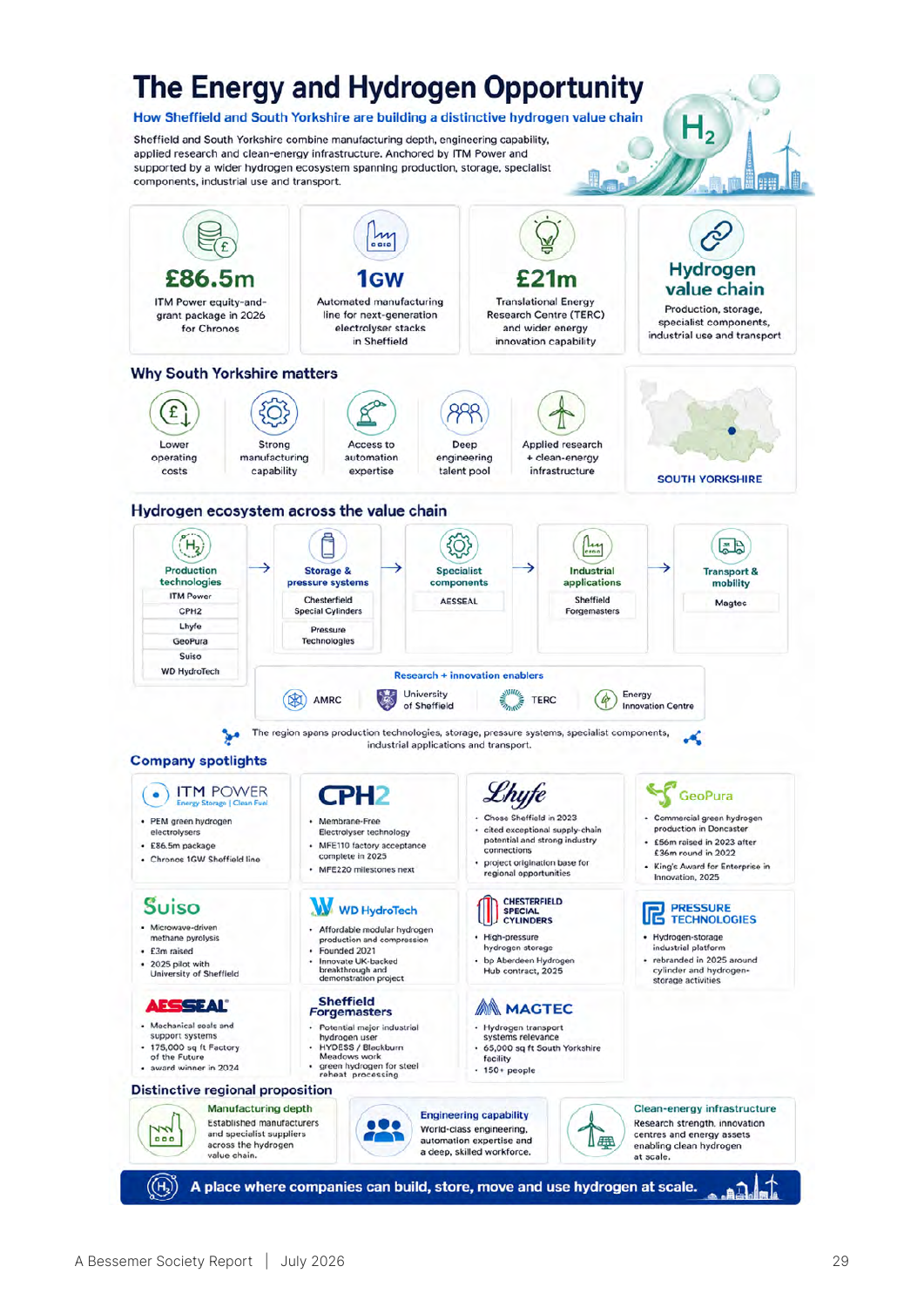
The Energy and Hydrogen Opportunity. Original figure, report p29. Open full-size image (opens in a new tab)
Magtec’s move to a 65,000 sq ft South Yorkshire facility and its workforce of 150+ people underline its scale. Its relevance is that hydrogen in transport will depend not only on fuel production, but on vehicle-system integrators capable of bringing new propulsion technologies into commercial vehicles. In this architecture, the electric motor and drivetrain - Magtec’s core specialism - is the foundation on which the hydrogen fuel cell sits as a range extender.p30
Driving of a defence dimension for hydrogen
It should also be noted that Magtec is developing hybrid electric drive systems for military logistics support vehicles, having presented its technology at a Future Armoured Vehicles Power Systems event - to provide a resilient government-funded base that will sustain the business through whatever pace of transition the civilian market ultimately delivers.p30
This offers a potential read-across to ITM Power’s partnership with Rheinmetall to support its plans to build a network of decentralised green hydrogen-based e-fuel plants across Europe, as part of Rheinmetall’s Giga PtX programme which plans to deploy several hundred e-fuel plants with around 50MW of electrolyser capacity.p30
For ITM Power, with its Sheffield Bessemer Park Gigafactory and its newly funded second 1GW automated manufacturing line, the Giga PtX programme represents a potentially sustained order pipeline from one of Europe’s most well-capitalised defence primes. This could also play sweetly into the hands of near neighbour Magtec with its electric motors and drive trains for defence.p30
An embryonic hydrogen value chain.
With just a few miles separating ITM Power and Magtec, we can see the emergence of a hydrogen cluster. ITM Power produces and supplies on-site hydrogen generation systems using its PEM electrolysis technology to make green hydrogen for refuelling fuel cell electric vehicles - the very vehicle class that Magtec and Arcola’s programmes are designed to serve.p30
Civil nuclear energy
The UK has a once-in-a-generation opportunity to reposition itself as a leader in the global nuclear manufacturing sector, particularly in the Small Modular Reactors (SMR) market. The Lower Don Valley could and must play a key role in this. But research for this report reveals there is a serious risk that these opportunities are already heading to Europe, America and Asia. Running in parallel with this, there is a similar risk to the emerging supply opportunity/challenge in the defence sector.p30
Home benefit or own goal?
The three most technically demanding, highest value-added subsystems of the Rolls-Royce SMR - turbines, nuclear steam generators, and critical pressure boundary components - could all be heading to suppliers in Germany, South Korea and Canada. This would be a systematic transfer of the highest-value nuclear manufacturing work to countries with longer nuclear manufacturing pedigrees - and in the Czech case, a country that is simultaneously a customer and, increasingly, a competitor for that manufacturing work. It makes commercial sense for Rolls-Royce SMR, but not for UK manufacturing. And especially not for the industries in the Don Valley Corridor.p30
Hard cash contracts to soft commitments
So called “localisation strategies” and “future manufacturing” are soft commitments. They do not specify what proportion of manufacturing value will be retained or built up in the UK, which components are in scope, or by what date UK suppliers need to be qualified to participate. The window in which these decisions are made - during detailed design, before the first units are ordered - is finite. Once a supply chain is established, qualified, and delivering, it tends to stay established. The first-mover advantage in nuclear manufacturing is as real as it is in nuclear technology. Rolls-Royce SMR alone forecasts that a full SMR fleet could result in a contribution of up to £54 billion to the UK economy between 2025 and 2105, with 40,000 supply chain jobs created by 2050.pp30-31
Fusion: the future of clean energy at Orgreave
The UKAEA’s decision to establish a £20 million test bed facility in Rotherham was hugely influenced by the presence of the AMRC. Originally the plan had been to site the facility on the other side of the Parkway on land owned by the University of Sheffield. The protracted nature of the talks led to discussions with Harworth, landowner and developer of the old Orgreave site, where the core of the AMRC and the AMP is located. The agility shown by Harworth led quickly to the re-location of the proposed facility to the other side of the Parkway.p31
A key message for policy makers here is the importance of a shared vision for innovation development sites: a small and agile Harworth team quickly bought into the vision for the AMRC to be an anchor for the cluster and were willing to turn investors away who did not fit the carefully curated profile of the emerging cluster.p31
Fusion futures look local
On the clean energy front, albeit within a much longer time frame, the future of fusion is of planetary significance. Getting there, however, is a step-by-step process. A process the UKAEA is determined will involve local companies, brought together to grow an indigenous supply chain.p31
The UK Fusion Futures programme has a clear focus on SME development. Four companies are involved in the Programme, three of which are based in Sheffield (AML, Acantecs and Forg3D).p31
John Schofield, MD of Acantecs, which is featured further in this report, said: “This collaboration has offered a valuable opportunity to explore innovative applications of our existing technologies. By integrating Electroforming as a complementary method of canister manufacturing alongside our established PM HIP technology and processes, we have opened a new pathway for near-net shape product production. This advancement not only supports the evolving needs of future fusion technologies but also highlights the power of collaborative innovation.”p31
For the UKAEA the message is clear: “These crucial Fusion Futures projects enhance industry capability within the growing UK fusion sector whilst supporting SMEs to work together on innovative solutions that will serve the local economy and wider fusion ecosystem now and in the future.”p31
Pillar 7 / pp32-34
Health and MedTech
Among UK universities Sheffield is ranked #1 for medical engineering and imaging; it is the home to the Sheffield Institute for Translational Neuroscience (SITraN), which is a world leader in Motor Neurone Disease and Parkinson's research; it is particularly strong in imaging-AI and advanced diagnostic technologies like PET-MRI and photon-counting CT.p32
The University is generating a growing number of spinouts in related medical hardware fields. It has even attracted companies like Gold Standard Phantoms, a medical imaging spinout from UCL, to move to Sheffield.p32
University Health and MedTech Spin-outs
p32- Nasalyser
- Breath analyser for gastric cancer
- NANOncolytes
- Better targeted delivery of drugs
 Exciting Instruments (opens in a new tab)
- Single molecule detection platform
- Unicorn Biotechnologies
- Automated hardware and software platforms for cell culture and biomanufacturing
 Pyr Optik (opens in a new tab)
- Hand-held non-contact optical measurement
- SleepCogni
- Dynamic vibration for insomnia
- Diurnal
- Novel drug delivery
- Metallobio
- Antimicrobials for difficult to treat infections
- Mitotype Precision Labs
- Biological assays
- PHAST
- Replacing fossil-based plastic in the supply chain
A sense of excitement
Exciting Instruments has been mentioned already as one of the standout deep tech spinouts. The company’s co-founder and CEO, Tim Craggs, engaged in a form of academic wanderlust, hopping between Cambridge, Yale, Oxford, St Andrews and Bristol before settling at the University of Sheffield’s Department of Chemistry where the science that became Exciting Instruments was developed in close collaboration with colleagues, including Dr Alison Twelvetrees at Sheffield and Professor Mark Leake at the University of York.p33
The company’s flagship product, the EI-FLEX, is a compact benchtop system that democratises single-molecule fluorescence spectroscopy - a technique previously confined to a handful of specialist laboratories worldwide, requiring expensive equipment and purpose-built facilities. Exciting Instruments puts the same capability on a bench, with software so accessible that non-specialists can run complex experiments and share live data in real time. Technological democracy in action.p33
Precision optics democratised
Today the instruments are assembled by hand at Pennine Five in Sheffield city centre. Most components are sourced from China, a supply chain decision that reflects the commercial realities of precision optics manufacturing but one that Craggs and his team are actively managing as the business scales. It is a detail that connects Exciting Instruments to a broader challenge facing the UK’s hard tech sector: world-class science, assembled in Sheffield, dependent on a global component supply chain that carries its own strategic risks.p33
In November 2024 the company closed a £4 million seed round led by Northern Gritstone, with co-investors Empirical Ventures, Praetura Ventures and two serial entrepreneurs whose backing carries particular weight:p33
Bessemer Society regular, Stan Boland - who has founded, led and sold three semiconductor and AI startups - invested alongside Jonathan Milner, one of Cambridge’s best known and successful life science serial entrepreneurs.p33
Boland’s verdict was unambiguous: “Exciting Instruments has created compelling new products for a deep market need. Tim and Rob’s energy is incredible, and I’m thrilled to play a part in helping them turn their amazing technology into the powerhouse of a huge business that will accelerate the pace of disease detection and drug development for the benefit of us all.”p33
Speaking of energy, Craggs says, “We have to be on the front foot. We don’t have the capital or people as London or the Golden Triangle, so we have to be efficient. We will do that by collaborating across stakeholders.”p33
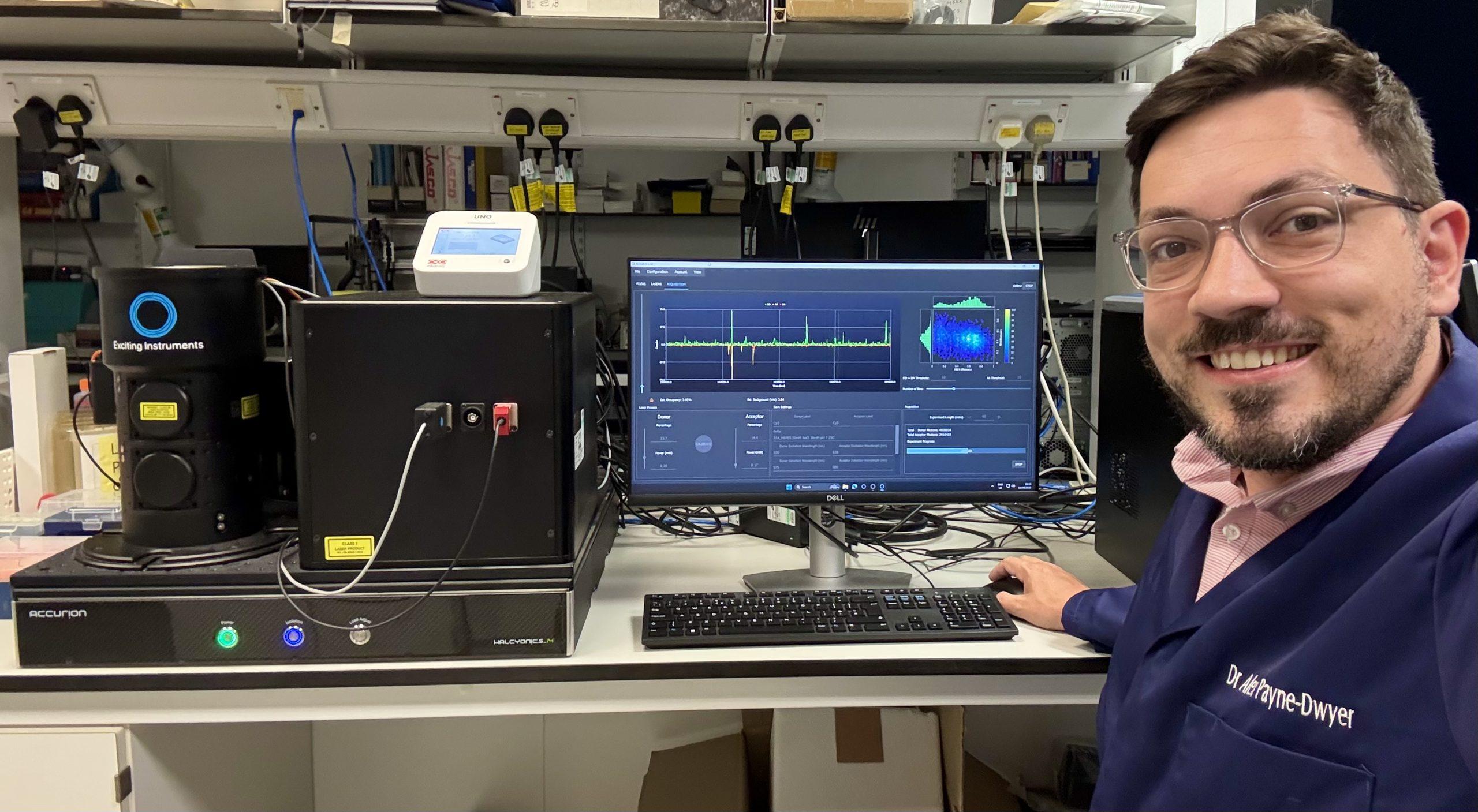
We have to be on the front foot. We don’t have the capital or people as London or the Golden Triangle, so we have to be efficient. We will do that by collaborating across stakeholders.
Where health meets hardware
At the northern tip of the Don Valley Corridor is the Sheffield Olympic Legacy Park built in 1991 on a 35-acre brownfield site to host the World Student Games. What has grown on the site over the past decade is one of the most distinctive health innovation ecosystems in the UK - one that combines world-class applied research, diagnostic technology, preventative healthcare infrastructure and a growing pipeline of medtech spinouts in a single, purposefully designed location.p34
The anchor institution is Sheffield Hallam University’s Advanced Wellbeing Research Centre (AWRC) inspired by, and created in collaboration with, the founders of the AMRC. Based in Attercliffe, the AWRC provides access to state-of-the-art, fully instrumented indoor and outdoor laboratories. Its strategic partners include Canon Medical Systems, Westfield Health and parkrun - an unusual combination that reflects the AWRC’s distinctive positioning at the intersection of elite sport science, population health and consumer technology.p34
The most visible recent addition to the OLP is the Canon Medical Arena. With an integrated Medical Diagnostic Centre it provides health researchers access to advanced Canon Medical imaging systems including AI-assisted CT and MRI scanners, ultrasound, digital X-ray and fluoroscopy, plus consulting rooms and a minor surgery operating theatre. Canon Medical Arena is also a showcase for Canon Medical’s advanced imaging products and an AI incubation hub for research and development, focusing on health screening and disease prevention.p34
Expanding preventative health care
Underpinning the clinical and commercial activity is a deepening research infrastructure. The £4 million South Yorkshire Digital Health Hub, based at the AWRC is led jointly by the University of Sheffield and Sheffield Hallam University, and supported by the EPSRC to transform how patients are treated across a region of 1.4 million people affected by high levels of disease and health inequality. Google has invested in the Hub as an industry partner - a signal that the digital health opportunity Sheffield is building is attracting serious commercial attention beyond the region.p34
Institutional architecture for MedTech to grow
What is taking shape at the Sheffield Olympic Legacy Park is not yet a medtech cluster of the scale of Cambridge or Edinburgh, but it has the institutional architecture - clinical, academic, manufacturing and commercial - that those clusters needed decades to assemble. The establishment of a National Centre for Child Health Technology will expand the MedTech cluster. The Child Health Tech accelerator, launched by Sheffield Children’s NHS Foundation Trust in partnership with UP Ventures and Par Equity (now PXN), is already identifying the next generation of investable companies. Sheffield’s medtech moment is approaching.p34