
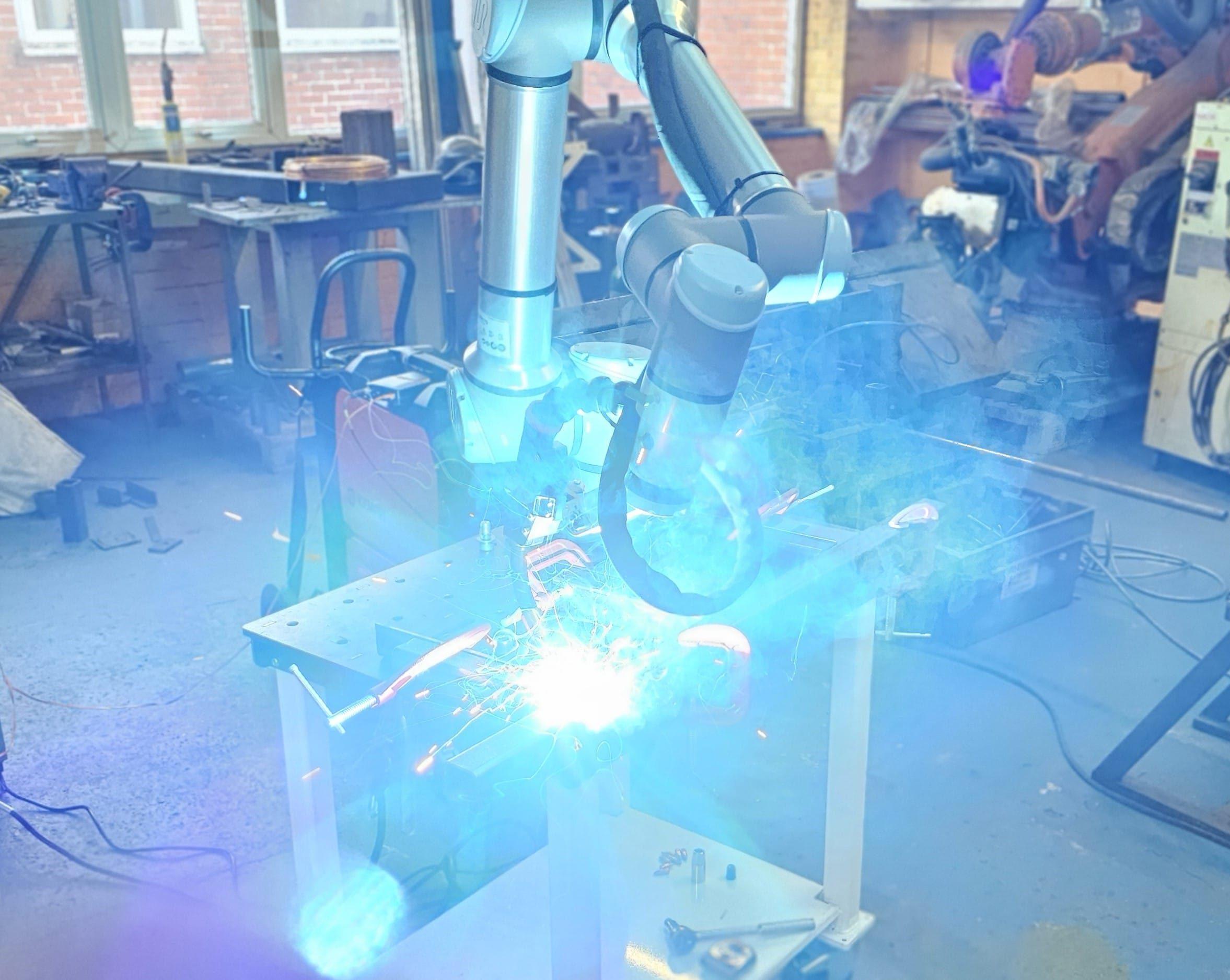
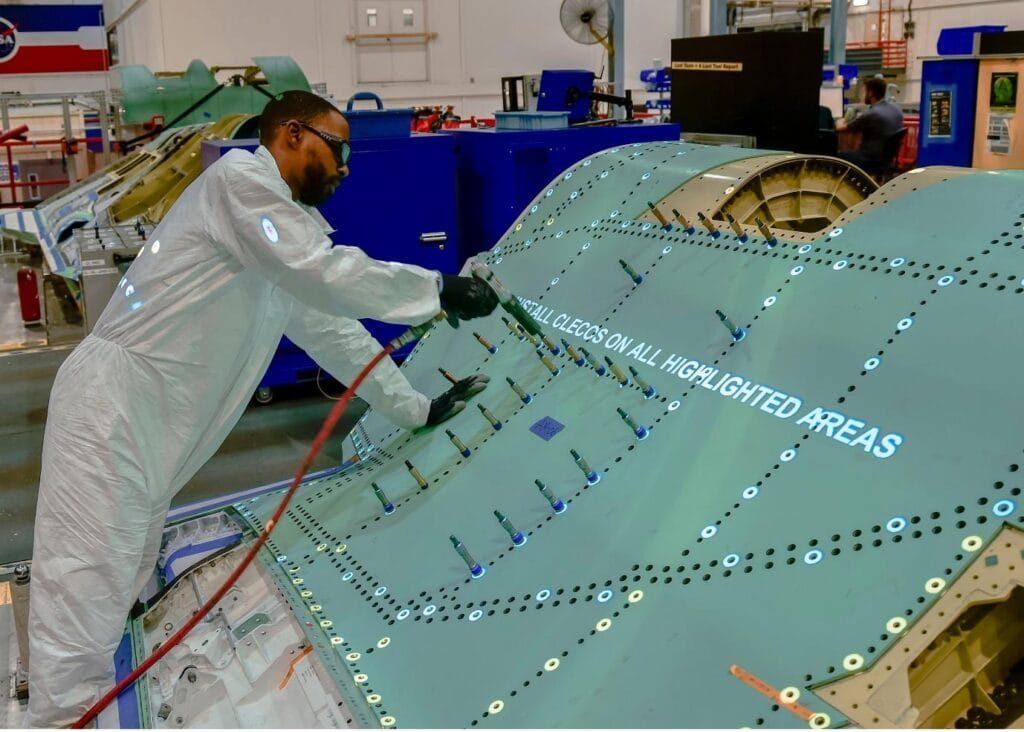
Jim Heley spent a decade at the AMRC solving the hardest assembly and automation problems in aerospace, the kind that, left unsolved, cost manufacturers millions in rework, scrap and lost contracts. As Head of the AMRC's Integrated Manufacturing Group, he led the development of digital technologies now transforming how complex products are built: laser projection systems that guide assemblers with pinpoint accuracy, large-volume metrology tools, and robotics that take over the most dangerous, repetitive and exacting tasks on the shop floor.p62
In 2012, he turned that knowledge into a business. A3L, Advanced Automation and Assembly Ltd, is a Sheffield-based robotics and automation specialist serving customers from SMEs to global blue-chip manufacturers in aerospace, defence, plastics and sports goods, across the UK and Europe.p62
Its expertise spans industrial robots and cobots, optical projection and augmented reality for complex assembly, metrology, and digital work instructions that replace paper drawings with dynamic, error-proof guidance at the point of build. Customers report zero-defect assembly as a measurable operational reality, not an aspiration.p62
We want to grow and become the UK's top automation specialist for finishing and polishing operations, and to compete internationally.
From aerospace labs to a traditional Sheffield hand tool factory
The story that best captures A3L's character begins not in an aerospace facility, but in a hot, sparks-flying, drop-hammer Sheffield factory: Footprint Tools. This is a company that has been making hand tools for the construction industry since the 1870s, owned by the same family across four generations. At its peak it employed over 300 people. By the time Tim and Richard Jewitt took over the business, it had been much reduced to a workforce of six, by the twin pressures of Far East competition and the collapse of Sheffield's coal and steel industries.p62
Their flagship product, the builder's line pin, produced at 200,000 units a year, required two highly skilled craftsmen performing a labour-intensive linishing and polishing process by hand, day in, day out. The quality was exceptional; the productivity was not. The Jewitts turned to the AMRC, and the AMRC pointed them towards A3L.p62
What followed was a masterclass in practical automation. Heley's team, with support from the AMRC, spent time on the Footprint shop floor watching the two craftsmen at work, filming the subtleties of their hand movements in slow motion to understand what the robot would need to replicate. A3L then sourced a second-hand robot, keeping costs within reach of an SME, programmed it to reproduce the precise motions, designed and 3D-printed a bespoke fixture to hold each pin at exactly the right angle, and integrated the whole cell into live production.pp62-63
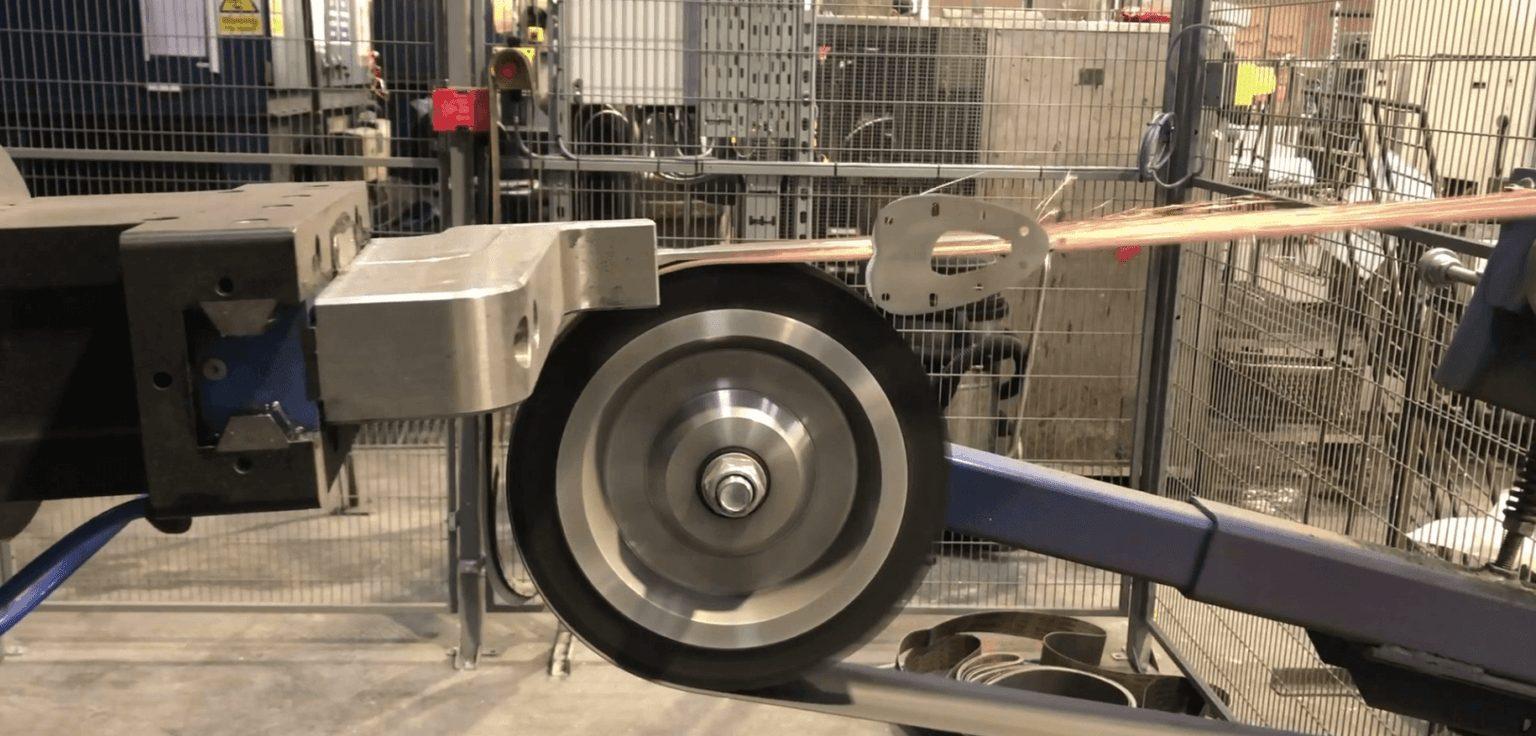
The results were transformative. Footprint's average days-to-despatch fell from 21 days to just seven. One person now does what three had done before. The two craftsmen, freed from the grinding repetition of linishing, moved on to higher-value work that unlocked bottlenecks across the factory. The workforce has since doubled to twelve.p63
From 21 days to seven
Footprint Tools' robotic linishing cell changed the flow of work through the factory.
Footprint Tools
Report p6321 days
7 days
Both bars use the same time scale, starting at zero. These are average days-to-despatch, not the time taken to machine a part.
A3L integrated the robotic cell into live production. One person now does what three had done before.
Higher-value work
The two craftsmen freed from linishing moved on to higher-value work that unlocked bottlenecks across the factory.
A workforce of twelve
The report states that the workforce has since doubled to twelve.
We were concerned that this kind of project was too small to be of interest to the AMRC. We couldn't have been more wrong. They have been with us at every step of the way, even helping source a second-hand robot and introducing us to an AMRC spinout to integrate it on the production line.
Bigger ambitions, same philosophy
The Footprint story illustrates the principle at the heart of everything A3L does: automation is not the enemy of skilled workers, it is their liberator. The same philosophy runs through A3L's Made Smarter Innovation collaboration with HAL Robotics, which produced a self-programming robotic finishing cell capable of adapting to the shape and requirements of each individual part, reducing robot programming time from up to a week to mere seconds.p63
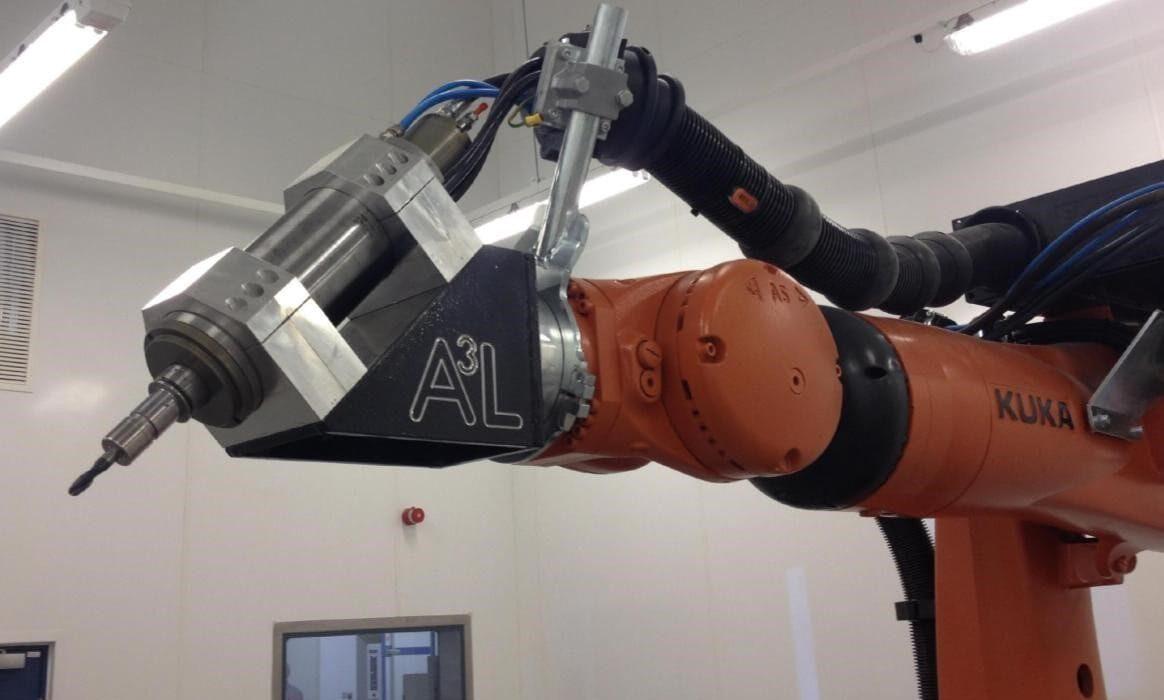
Heley's stated ambition is to become the UK's leading automation specialist for finishing and polishing operations, competing internationally. The Footprint cell was, as it turns out, the proof of concept for that entire journey.p63